

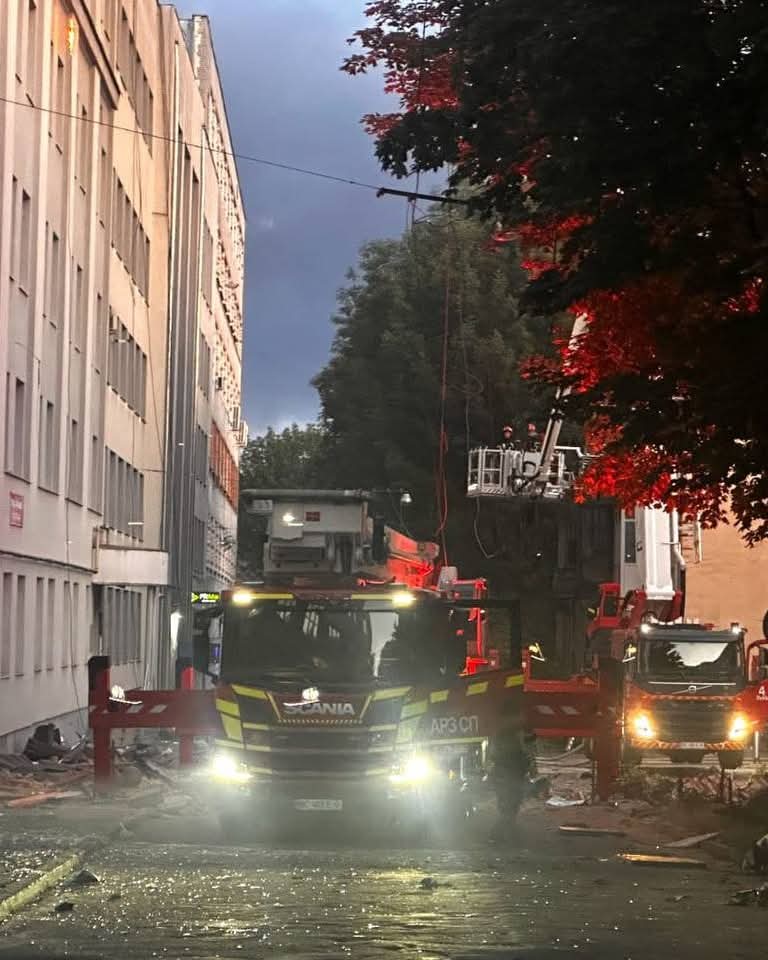
Russia intensified its assault on western Ukraine for the third consecutive night on July 12, deploying drone swarms and ballistic missiles that shattered the sense of safety far from the front line.
Explosions rocked Lviv, Chernivtsi, and Lutsk between 3:00 a.m. and 4:45 a.m. local time, a coordinated strike reported by Kyiv Independent and confirmed by public broadcaster Suspilne .
In Chernivtsi, near the Romanian border, a 26‑year‑old woman and a 43‑year‑old man died after debris from the air strikes fell onto residential buildings, according to regional governor Ruslan Zaparnyuk. Fourteen more civilians sustained injuries, with four in critical condition. The attacks damaged homes, shops, administrative facilities, and vehicles .
Lviv’s Zaliznychnyi and Halytskyi districts endured the heaviest damage. Mayor Andrii Sadovyi said a fire erupted atop a non‑residential structure, while rockets and drones struck residential homes, industrial facilities, cars, and even a kindergarten. Six people were injured, including an 11‑year‑old boy. One victim went to the hospital; five received field treatment.
In total, 46 houses, 20 vehicles, 20 businesses, courthouse buildings, and parts of Lviv Polytechnic National University suffered destruction. Fifteen apartments are now uninhabitable; 28 displaced residents have been offered temporary lodging in hotels .
Lutsk sustained less damage—a home and a vehicle were hit—but no injuries were reported, said Mayor Ihor Polishchuk .
Ukraine’s Air Force issued warnings of dozens of incoming attack drones targeting Lviv, Ternopil, and Volyn oblasts along the western border. Poland’s Air Force reportedly scrambled jets to secure its airspace as fallout from the bombardment .
Russian officials have not acknowledged the strikes. Ukrainian authorities, citing security protocols, have withheld details on military targets, making a full tally of damage and casualties difficult .
This nighttime escalation followed similar patterns from early July, including a record-breaking drone barrage on July 9 using 728 drones and 13 missiles against Ukraine—though Lviv and other western regions were less affected that time .
Ukraine’s Foreign Minister Andriy Sybiha denounced the campaign as “terror,” citing Russia’s capacity to produce “hundreds of means of terror” daily. He urged broader and stricter sanctions, emphasizing that these assaults threaten not only Ukraine but the entire transatlantic community .
Ukraine President Volodymyr Zelenskiy has repeatedly stressed the urgency of strengthening air defense systems, though anti-air missile supplies from Western allies have fluctuated amid diplomatic complexities .
These attacks represent a stark tactical shift: long considered safe, western regions are now clearly in Russia’s crosshairs. The bombardments of Lviv and Chernivtsi, rich in cultural significance and key civilian infrastructure, signal a dangerous escalation. Local officials report a haunting pattern—night after night, drones and missiles violate the sanctity of everyday life .