


By Adeyemi Adekunle
In a determined effort to ensure ecological justice and resilience in Nigeria, the Health of Mother Earth Foundation (HOMEF), an independent ecological think tank, has officially launched its School of Ecology for 2025 in the capital city of Edo state, Benin City. This initiative is designed to equip individuals with knowledge and advocacy skills to influence environmental policies and drive grassroots movements that promote sustainable well-being and justice.
The launch of the School of Ecology comes at a critical moment for Nigeria, where environmental degradation, deforestation, oil spills, and climate change continue to threaten the livelihoods of communities.
Through education, activism, and research, HOMEF hopes to challenge exploitative practices and encourage solutions that respect both people and nature.
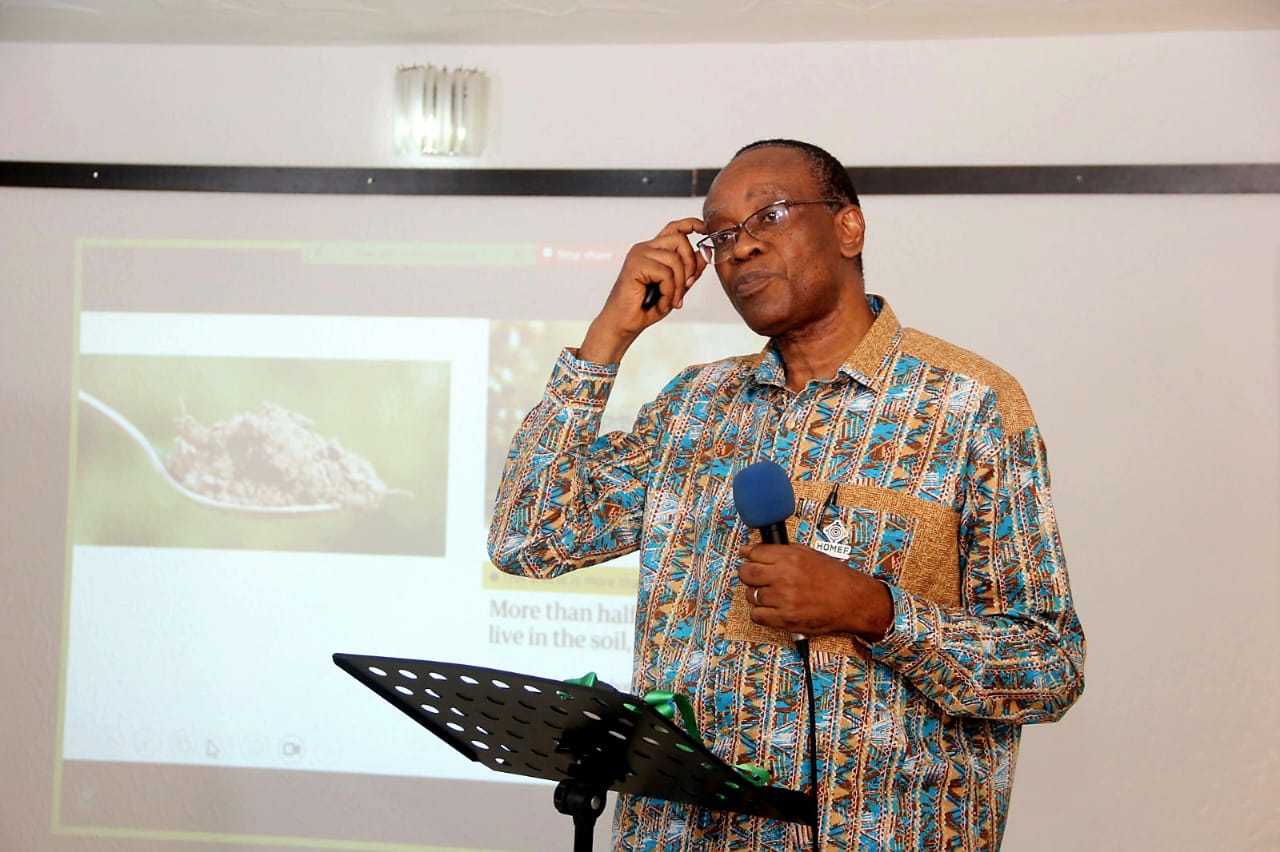
The opening session, led by Dr. Nnimmo Bassey, Director of HOMEF and a globally recognized environmental activist, focused on the topic “Environment and the Webs of Life.” His presentation provided an in-depth understanding of the interconnectedness between humans and nature, highlighting how the destruction of ecosystems directly impacts human survival.
He traced the roots of pollution in Nigeria, explaining how corporate greed, governmental neglect, and unsustainable industrial practices have fueled the country’s ecological crisis.
A striking fact from Dr. Bassey’s lecture was that humans make up only 0.01% of the Earth’s biomass but are disproportionately responsible for pollution and destruction. This unsettling reality underscores the urgent need for responsible environmental stewardship.
He emphasized that reversing the damage requires deliberate policies, a shift from profit-driven exploitation to people-centered sustainability, and strong community activism.
While the first session laid the groundwork for understanding environmental challenges, the second session broadened the conversation, diving into key issues such as pastoralism, land tenure systems, and extractivism.
Experts and scholars shared insights into how industrialization has displaced indigenous landowners, how resource extraction continues to exploit local populations, and how economic systems like the green and blue economies often serve as capitalist tools rather than true solutions to ecological crises.
One of the most engaging discussions was led by Ikal Ang’elei, a Kenyan environmental activist and land rights advocate, who spoke passionately about pastoralism and the land tenure system. She pointed out that pastoral lands are disappearing due to industrial expansion, government policies that favor corporations, and land grabs. She urged participants to recognize the role of land as a cultural and economic asset that must be protected from external forces seeking to commercialize it at the expense of local communities.
Kome Odhomor, a leading expert in environmental justice, leadership, and ethics, delivered a thought-provoking presentation that included a video documentary on ecological destruction and corporate exploitation. The discussion that followed delved into how leaders in Africa must prioritize ethics in environmental policies rather than bow to corporate pressures. Odhomor emphasized that true leadership in environmental justice requires defending the rights of communities, standing against harmful policies, and promoting laws that hold corporations accountable.
Another compelling session featured Professor Fidelis Allen, an environmentalist and scholar, who examined the relationship between extractivism, predators, and prey in the Nigerian and African contexts. He argued that extractivism—whether in oil, mining, or forestry—operates as a system of oppression, where large corporations and political elites act as predators while ordinary citizens, indigenous groups, and rural communities are reduced to prey. He described how oil exploration in the Niger Delta has devastated entire ecosystems, leading to poverty, displacement, and violent conflicts.
Adding a fresh perspective to the conversation, Stephen Oduwaye explored the concepts of the green economy, blue economy, and the many “colors of capitalism.” He explained how governments and corporations often rebrand economic models to appear environmentally friendly while continuing to exploit natural resources. He pointed out that while the blue economy promotes sustainable use of ocean resources, in many cases, it prioritizes industrial fishing, offshore drilling, and ocean mining over the protection of marine life and coastal communities.
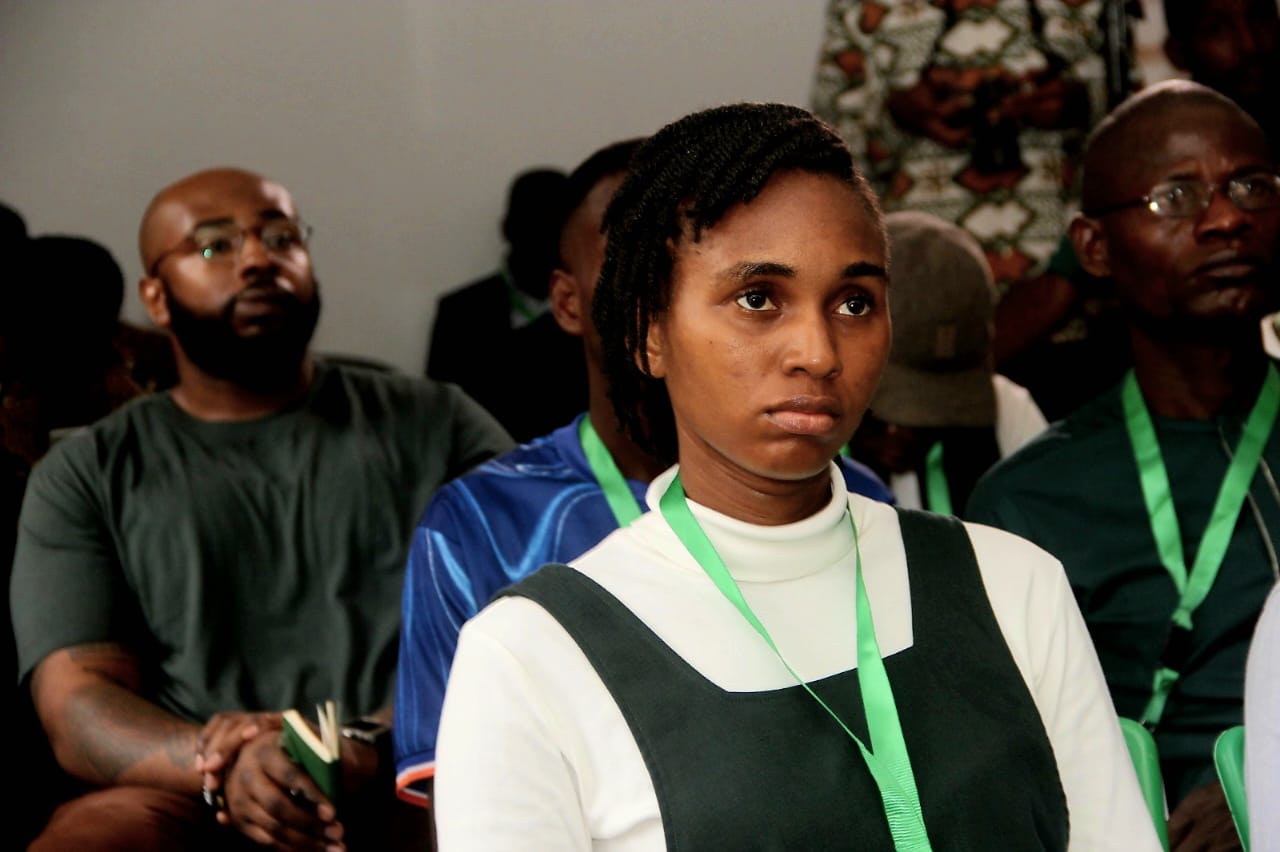
Participants at the School of Ecology were particularly engaged in discussions about the real impacts of these economic models on Nigeria’s environmental landscape. Several community leaders from oil-producing regions spoke about the damage caused by multinational corporations, while activists from deforested areas detailed how land-grabbing by agribusinesses has led to food insecurity and loss of biodiversity.
A recurring theme throughout the sessions was the urgency of grassroots action. The speakers emphasized that change will not come from government policies alone but from community-driven resistance and advocacy. The School of Ecology, therefore, aims to train activists, scholars, and community leaders to become strong voices for environmental justice—equipped not just with knowledge but also with the tools needed to challenge unjust systems.
HOMEF’s School of Ecology does not merely discuss environmental problems; it actively works toward solutions. As part of its training, the school will include field visits to affected communities, hands-on research projects, and policy advocacy training. Participants will be encouraged to develop campaigns, write petitions, and engage in public awareness programs that challenge environmental injustices.
Beyond Nigeria, HOMEF’s School of Ecology has regional and global significance. Environmental degradation in Africa is often driven by international corporations and foreign interests, and many of the challenges faced in Nigeria are similar to those in other African nations. By creating a network of scholars and activists, the school aims to strengthen international solidarity in the fight against environmental exploitation.
HOMEF’s approach is unique in that it integrates science, indigenous knowledge, policy analysis, and activism into a single framework. Instead of relying solely on academic theories, it prioritizes real-world experiences, community engagement, and action-oriented learning. This method ensures that participants leave not just with knowledge but with strategies for implementing change.
In an interview following the launch, Dr. Nnimmo Bassey expressed optimism about the impact of the School of Ecology. He stated that Nigeria is at a critical crossroads, and without urgent interventions, the country’s natural resources will be depleted beyond recovery. He called on young activists, community leaders, and policymakers to take bold steps in protecting the environment.
The launch of the School of Ecology marks the beginning of a new chapter in Nigeria’s environmental justice movement. With each session, the program will continue to train individuals who will lead the charge in advocating for sustainable environmental policies, holding corporations accountable, and ensuring that future generations inherit a planet that is habitable and thriving.
As the School of Ecology grows, it is expected to expand its curriculum to include topics such as climate change adaptation, indigenous land rights, renewable energy, and policy advocacy strategies. The hope is that over time, graduates of the program will take on leadership roles in government, academia, activism, and global environmental organizations.
HOMEF’s commitment to ecological justice is unwavering, and with the launch of this School of Ecology, the organization is building a foundation for a future where people and the planet coexist in harmony. Through education, research, and advocacy, the school is set to become a powerful force in the fight against environmental degradation and climate injustice in Nigeria and beyond.
The next sessions of the School of Ecology will take place in different locations across Nigeria, with more scholars and activists joining the movement. As more people become informed and empowered, the fight for ecological justice will gain momentum, challenging those who continue to put profit over the planet.
For Nigerians, the School of Ecology is more than an educational program—it is a call to action, a space for transformation, and a catalyst for a just environmental future.