

By Adeyemi Adekunle
For decades, Nigeria has grappled with an ongoing fuel crisis, heavily reliant on imports to meet its burgeoning energy demands. Spending a staggering $15 billion annually on fuel imports, the country has long struggled to provide affordable gasoline for its citizens. However, recent developments signal a potentially transformative shift in Nigeria’s energy landscape, as strategic alliances emerge to foster homegrown energy solutions.
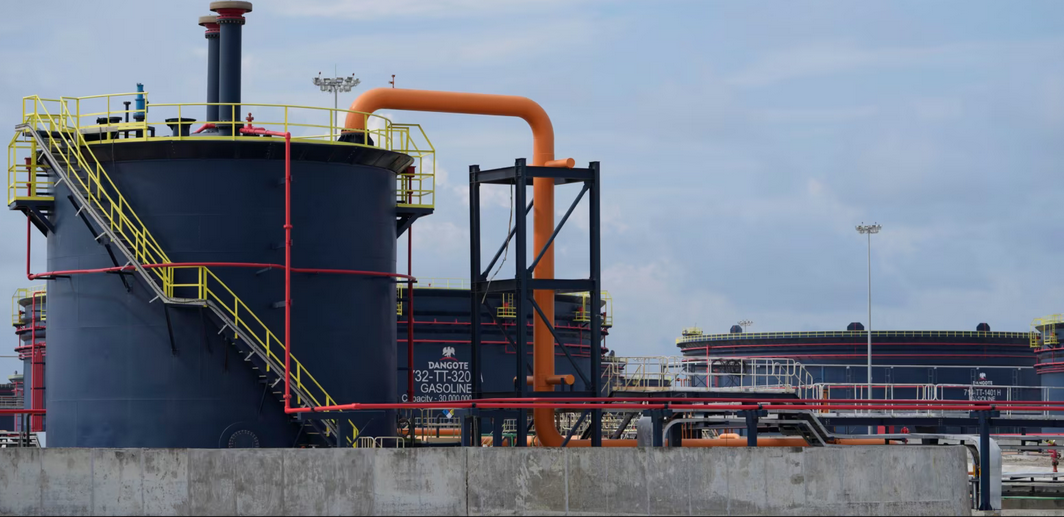
In a significant collaborative effort, the Nigerian National Petroleum Company Limited (NNPC) has teamed up with Dangote Refinery and independent oil marketers, marking a critical transition towards local production of petrol and alleviating the heavy financial burden of imports. By sourcing petrol directly from Dangote, Nigeria aims to slash import costs, stabilize fuel prices, and ultimately make energy more accessible for consumers. Industry experts are heralding this move as a watershed moment for the Nigerian economy.
Faith Nwadishi, an energy analyst, lauded the agreement’s potential to fortify the nation’s economic framework. “If we begin to buy products from Dangote, we will be able to save at least 24 trillion naira [$14.3 billion] yearly. Nigeria depends on that. The economy depends on that,” she stated.
Highlighting the crucial link between fuel availability and economic stability, Nwadishi remarked on the hardship faced by citizens when fuel shortages occur, underscoring the importance of this new approach. This sentiment is echoed by David Etim, an energy entrepreneur who describes energy independence as a vital aspect of national security.
“Energy self-sufficiency is actually a national security issue,” Etim explained. “No country can claim to be independent if it relies on foreign sources for essential inputs such as energy. This shift from dependency to independence is a significant and positive step for Nigeria.”
Currently, Nigerians are grappling with soaring fuel prices, with some areas reporting costs exceeding 1,200 naira per liter (approximately $0.71). Business leaders are particularly hopeful for relief. Felix Chukwuemeka, a businessman based in Abuja, expressed his frustrations with rising transportation costs.
He noted, “Just a short trip used to cost 300 naira [$0.18]; now it’s 600 naira [$0.36]. This expense is doubled, and we’d be very excited if petrol prices reduced, as it would significantly enhance our business operations.”
While optimism permeates discussions about these new collaborations, challenges loom large on the horizon. Nigeria currently faces a critical issue with its four refineries, all of which remain nonoperational, raising questions about the long-term sustainability of local production efforts. Senior economist Paul Alaje emphasized the urgent need for revitalizing these refineries and stabilizing the national currency. “The longer we neglect our refineries, the more they become sunk costs to the economy.
Despite the positive agreements in place, I remain skeptical about achieving realistic price stabilization without addressing the underlying economic factors, particularly the exchange rate,” Alaje cautioned. Experts stress that while the new alliances signal a hopeful shift in the oil sector, achieving tangible benefits for Nigerians requires transparency, accountability, and rigorous enforcement of the agreements.
For now, the impact on petrol prices remains negligible, leaving citizens hopeful yet anxious about the future. If successful, these groundbreaking agreements could usher in a new era for Nigeria’s oil industry—one characterized by greater energy independence, stabilized fuel prices, and economic growth. As the nation strives to regain control over its energy resources, the eyes of both citizens and global observers remain focused on the unfolding developments in Nigeria’s quest for a more self-sufficient energy landscape.
As the country moves forward, the call for renewed focus on local refinement capabilities coupled with a commitment to transparency in implementation could very well dictate the success of this pivotal moment in Nigeria’s economic narrative. A collective optimism hangs in the air, with hopes that a more prosperous and energy-independent Nigeria is just around the corner.